
AFFIX specializes in manufacturing a complete range of high-quality concrete Tie Rods designed to meet the demanding needs of modern construction projects. Our product portfolio includes both discontinuous threaded tie rods and continuous threaded rods, widely used in concrete formwork and shuttering applications such as wall, column, slab, beam, and bridge formwork. Engineered for strength, durability, and consistent performance, AFFIX Tie Rods ensure secure formwork alignment and structural stability. While 15mm, 16mm, and 20mm diameters remain the most commonly used, we also offer customized sizes ranging from 6mm to 32mm in diameter to match specific project requirements and industry standards.
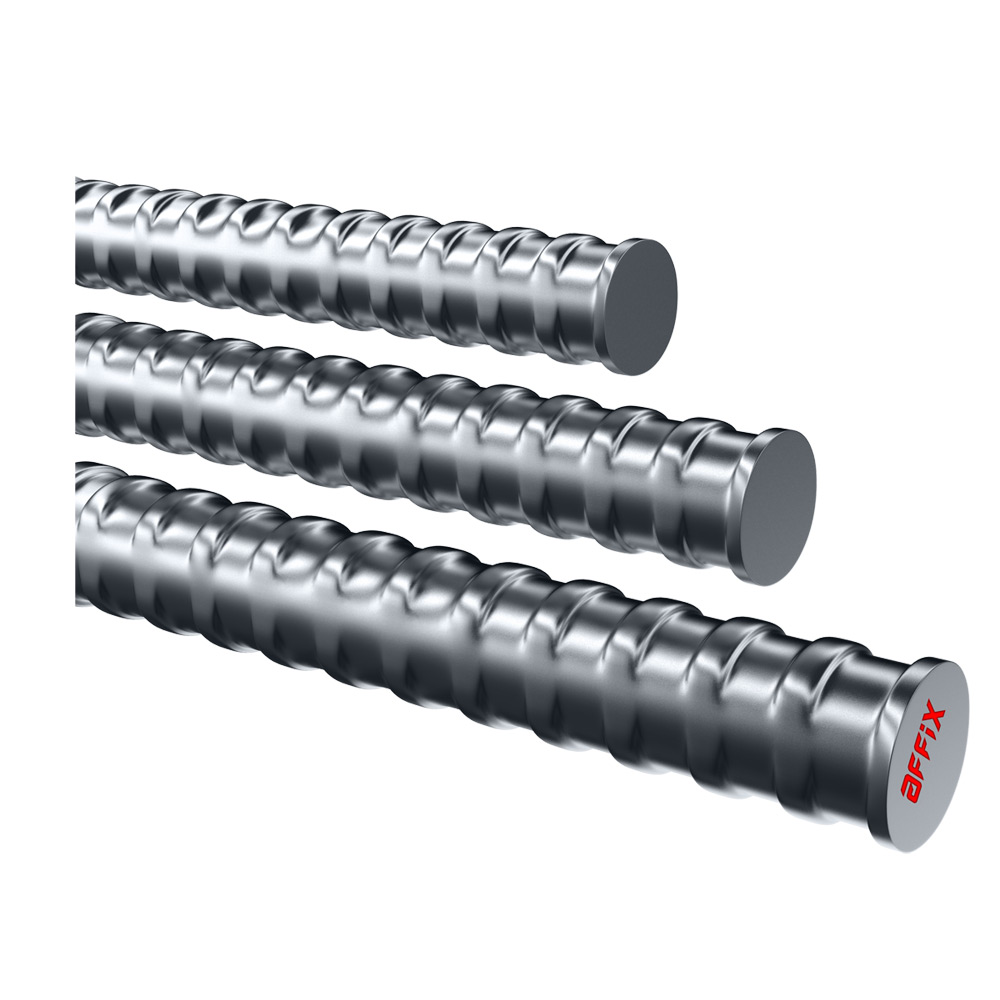

Not to be used near Electricity
Tie Rods
Model No. FA03
Tie Rod for Sale Finland
Affixscaffolding delivers specialized Tie Rod Finland solutions for contractors, engineers, and industrial buyers across Finnish construction markets. The service supports formwork stability, load control, and precise alignment for demanding projects that require consistent performance and dependable supply chains. Clients rely on clear specifications, controlled manufacturing, and reliable availability when sourcing a Tie rod for Sale in Finland through Affixscaffolding.
Core Definition and Structural Function of Tie Road
A tie rod serves as a critical tension-based component within construction assemblies, engineered to maintain spacing, alignment, and load balance between structural elements. Within Finnish construction environments, tie rods support controlled force transfer where compression-based systems alone cannot maintain dimensional accuracy. These components operate under tensile stress, allowing concrete formwork, shuttering systems, and structural frames to remain stable during load application and curing phases. Tie Rod Finland requirements demand precise tolerances, predictable elongation behavior, and compatibility with auxiliary components such as anchor plates, wing nuts, and couplers.
Tie rods function as stabilizing links rather than load-bearing columns. Their design allows structural systems to resist outward pressure generated by fresh concrete, vibration, and dynamic construction loads. This role becomes essential in large-scale projects where dimensional deviation can disrupt sequencing, safety compliance, and overall build quality. Finnish contractors prioritize tie rods that maintain mechanical consistency under variable site conditions, including temperature fluctuation and moisture exposure.
Mechanical Purpose Within Construction Systems
Tie rods regulate internal forces by holding parallel elements at fixed distances. They work in tension, counteracting lateral pressure while preventing displacement. This controlled restraint allows formwork systems to perform reliably during high-stress phases without deformation. Tie rod for Sale in Finland offerings must address this mechanical responsibility through material selection, thread accuracy, and surface integrity.
The operational role of tie rods extends across multiple construction stages. During initial setup, they enable accurate positioning. During concrete placement, they manage hydraulic pressure. During curing, they maintain dimensional stability. After the structural setting, they allow efficient dismantling without surface damage. This sequence-based utility reinforces their importance within professional construction workflows.
Functional Characteristics Required in Practice
Construction-grade tie rods operate under demanding physical and logistical conditions. Their role requires dependable tensile strength, resistance to thread wear, and dimensional uniformity. Finnish construction standards emphasize predictability rather than variability, which places technical responsibility on tie rod selection and handling.
Key functional characteristics include:
-
controlled tensile load capacity
-
consistent thread geometry
-
resistance to deformation under sustained tension
-
compatibility with standard fastening accessories
-
ease of installation and removal
These characteristics support site efficiency and structural accuracy without introducing complexity into assembly processes. Contractors rely on tie rods that integrate smoothly into modular formwork systems without requiring adaptation or modification.
Integration With Formwork and Structural Assemblies
Tie rods operate as connective elements that bind larger systems together. Their performance directly influences the behavior of surrounding components. In formwork assemblies, they connect opposing panels, enabling uniform pressure distribution across surfaces. In structural bracing systems, they assist in maintaining alignment during staged construction activities.
Affix scaffolding aligns Tie Rod Finland solutions with system-based construction practices, ensuring compatibility with commonly used formwork and shuttering configurations across Finland. This integration reduces friction between design intent and site execution, allowing engineering plans to translate accurately into built form.
Operational Reliability and Construction Accuracy
Tie rods contribute to construction accuracy by enforcing fixed distances and resisting unintended movement. This precision supports surface quality, dimensional compliance, and structural integrity. Finnish engineering expectations emphasize measurable accuracy rather than visual estimation, which places tie rods at the center of quality control processes.
Operational reliability also extends to installation handling. Tie rods must allow rapid tightening, controlled torque application, and predictable response under load. These factors influence crew productivity and site safety, especially in high-volume or repetitive construction cycles.
Structural Reliability Within Finnish Construction Conditions
High-quality tie rods play a decisive role in meeting the structural expectations of Finnish construction projects, where precision, durability, and predictable performance remain non-negotiable requirements. Construction environments across Finland expose materials to demanding site conditions that require components capable of maintaining mechanical stability without deviation. Tie Rod Finland applications depend on materials that deliver uniform tensile behavior while resisting distortion during pressure-intensive phases of construction. Inferior components introduce variability that can disrupt alignment, compromise surface integrity, and increase corrective labor demands.
Construction professionals rely on tie rods that maintain a consistent mechanical response under sustained tension. This consistency allows engineering calculations to translate directly into site execution without adjustment. When tie rods perform as intended, formwork systems maintain spacing accuracy, load transfer remains controlled, and construction sequences progress without interruption. High-quality manufacturing standards reduce uncertainty and allow contractors to plan workflows with confidence.
Material Integrity and Performance Consistency
Material selection directly influences tie rod performance. High-quality tie rods maintain uniform grain structure, controlled elasticity, and predictable elongation characteristics. These attributes ensure that applied tension distributes evenly across connected elements rather than concentrating stress at isolated points. Finnish construction projects prioritize materials that support stable deformation limits rather than unpredictable yield behavior.
Performance consistency supports both structural integrity and operational efficiency. Contractors benefit from components that respond uniformly during tightening and load application. Engineers benefit from a predictable stress distribution that aligns with design assumptions. Industrial buyers sourcing a Tie rod for Sale in Finland focus on suppliers capable of delivering this consistency across production volumes without variation between batches.
Material integrity also affects thread durability and surface interaction. Controlled manufacturing processes preserve thread geometry, allowing fastening components to engage securely without slippage or wear. This integrity supports repeated use cycles where dismantling and reinstallation form part of standard construction practice.
Dimensional Accuracy and Construction Precision
High-quality tie rods maintain precise dimensional tolerances that support alignment across large assemblies. Dimensional accuracy ensures opposing formwork panels remain parallel, structural elements maintain planned spacing, and finished surfaces meet specification requirements. Even minimal deviation can affect load distribution and visual quality, which reinforces the importance of controlled tolerances in tie rod production.
Finnish construction standards emphasize measurable accuracy over approximation. Tie rods that maintain exact length, thread pitch, and straightness enable crews to achieve precise assembly without compensatory adjustments. This precision reduces installation time and minimizes cumulative error across repeated assemblies.
Key precision-related advantages include:
-
uniform spacing control
-
consistent thread engagement depth
-
predictable tightening behavior
-
alignment stability under pressure
These advantages support efficient construction sequencing and reduce corrective interventions that disrupt timelines.
Load Management and Structural Stability
Tie rods manage tensile loads generated by concrete pressure, vibration, and dynamic site activity. High-quality tie rods distribute these forces evenly, preventing localized stress accumulation that can compromise surrounding components. Controlled load management protects formwork panels, connectors, and fasteners from premature wear or failure.
Structural stability depends on tie rods that maintain load-bearing integrity throughout the construction cycle. Finnish projects often involve complex geometries and staged pours that demand sustained tensile resistance. Tie rods that maintain performance under prolonged tension support uninterrupted construction progress and reduce risk exposure.
Load reliability also contributes to surface quality. Stable formwork alignment prevents bulging, misalignment, and surface irregularities. This stability directly affects finishing requirements and downstream construction phases.
Operational Efficiency and Cost Control
High-quality tie rods contribute to operational efficiency by reducing installation errors, minimizing replacement frequency, and supporting predictable performance. These efficiencies translate into measurable cost control across labor, materials, and project timelines. Contractors benefit from reduced downtime associated with component failure or adjustment.
Operational benefits include:
-
Faster installation cycles
-
Reduced corrective labor
-
lower material waste
-
extended service life
Industrial buyers evaluating Tie rods for Sale in Finland consider lifecycle performance rather than initial procurement cost. High-quality components support long-term value by maintaining functionality across repeated construction cycles without degradation.
Compliance With Finnish Construction Expectations
Finnish construction frameworks emphasize safety, reliability, and documented performance. High-quality tie rods align with these expectations by delivering measurable mechanical properties that support regulatory compliance. Construction stakeholders require components that integrate seamlessly into compliance-driven workflows without introducing uncertainty.
Compliance alignment includes:
-
predictable tensile capacity
-
consistent manufacturing standards
-
compatibility with certified accessories
-
traceable quality controls
Tie rods that meet these criteria support project approval processes and reduce administrative friction during inspections and audits.
Industrial Deployment and Sector-Specific Demand Across Finland
Industrial environments across Finland rely on tie rods as controlled tension components that support stability, alignment, and force regulation within large-scale construction and manufacturing-related projects. These environments demand components that perform reliably under continuous operational pressure, structured assembly methods, and strict safety expectations. Tie Rod Finland usage within industrial settings reflects a need for mechanical predictability rather than adaptability, as systems operate within predefined tolerances and fixed structural relationships.
Industrial buyers evaluate tie rods based on their ability to integrate into established workflows without disrupting sequencing or introducing variability. Tie rods serve as functional connectors that maintain spatial relationships between structural elements during assembly, reinforcement, and load-controlled operations. Their role supports both temporary construction phases and semi-permanent industrial structures that require sustained tensile control.
Application Alignment With Industrial Construction Systems
Industrial construction systems prioritize modularity, repeatability, and controlled load behavior. Tie rods function as standardized components that align with these priorities by delivering consistent tensile restraint across repeated assemblies. Their role supports uniform spacing and alignment across large surface areas, which proves essential in industrial-scale formwork and structural containment systems.
Industrial deployment emphasizes compatibility with mechanical fastening systems and load-rated accessories. Tie rod for Sale. Finland's procurement decisions focus on suppliers capable of delivering components that meet standardized interface requirements without modification. This compatibility allows industrial operators to maintain efficiency while minimizing inventory complexity.
Key industrial alignment factors include:
-
standardized thread profiles
-
consistent length tolerances
-
predictable tensile response
-
integration with modular assemblies
These factors allow tie rods to function as dependable system elements rather than variable components requiring adjustment.
Performance Expectations Under Industrial Load Conditions
Industrial environments subject tie rods to sustained tension, repeated tightening cycles, and continuous structural interaction. Performance expectations extend beyond initial load resistance to include long-term stability and resistance to mechanical fatigue. Tie rods must maintain functional integrity without elongation drift or thread degradation that could compromise alignment.
Finnish industrial construction emphasizes controlled load transfer rather than overcompensation. Tie rods that perform within defined mechanical limits support this approach by maintaining equilibrium between connected elements. This stability reduces stress concentration within adjacent components and preserves overall system integrity.
Performance reliability supports operational continuity. Industrial projects often follow fixed schedules where component failure introduces cascading delays. Tie rods that maintain performance consistency contribute to uninterrupted operations and predictable maintenance planning.
Supply Chain Reliability and Procurement Considerations
Industrial buyers require predictable availability and specification consistency when sourcing tie rods. Procurement decisions prioritize suppliers that maintain controlled production standards and reliable delivery schedules. Tie Rod Finland sourcing aligns with broader industrial procurement frameworks that emphasize continuity rather than spot availability.
Supply chain reliability supports inventory planning and project scheduling. Industrial operators benefit from components that arrive within defined parameters, allowing preassembly and staged deployment without on-site adjustment. Tie rod for Sale in Finland listings must reflect accurate specifications to support informed purchasing decisions.
Procurement-focused priorities include:
-
specification transparency
-
batch consistency
-
controlled packaging and handling
-
alignment with industrial documentation requirements
These priorities reduce administrative friction and support efficient material management.
Operational Safety and Industrial Compliance
Industrial construction environments operate under structured safety frameworks that prioritize risk prevention through design and material selection. Tie rods contribute to safety by maintaining controlled spacing and preventing unintended structural movement. Their role supports hazard mitigation without active intervention.
Safety-related expectations include secure fastening behavior, resistance to sudden failure, and predictable response under load. Tie rods that meet these expectations support compliance-driven operations where safety integrates into standard procedures rather than reactive controls.
Long-Term Value Within Industrial Systems
Tie rods contribute long-term value by supporting repeated use cycles, predictable maintenance schedules, and consistent system behavior. Industrial operators evaluate value through performance stability rather than initial acquisition cost. Components that maintain integrity across multiple deployments reduce replacement frequency and support cost-controlled operations.
Affix scaffolding aligns industrial Tie Rod Finland offerings with these value expectations by focusing on controlled manufacturing, specification clarity, and system compatibility. This alignment supports industrial buyers seeking dependable components that integrate seamlessly into Finnish industrial construction environments.
Why Choose Affixscaffolding?
Affix scaffolding operates with a clear focus on supplying tie rod solutions aligned with Finnish construction and industrial expectations. Every Tie Rod Finland offering reflects an emphasis on precision, consistency, and functional reliability rather than generalized supply. The company structures its services around the needs of contractors, engineers, and procurement teams who require dependable components that integrate seamlessly into regulated construction environments. This focus supports project continuity and reduces uncertainty during critical construction phases.
Affix scaffolding aligns technical specifications with practical site requirements, ensuring tie rods support controlled tension, dimensional accuracy, and structural stability. The approach prioritizes performance predictability, allowing construction professionals to execute plans without adjustment or compromise.
Controlled Manufacturing and Specification Discipline
Affix scaffolding maintains strict control over product specifications, ensuring tie rods meet defined mechanical and dimensional standards. This discipline supports uniform performance across batches and reduces variability that can disrupt site operations. Buyers sourcing a Tie rod for Sale in Finland benefit from transparent specifications that align with engineering requirements and procurement documentation.
Controlled manufacturing supports:
-
consistent tensile performance
-
uniform thread geometry
-
precise length tolerances
-
reliable surface integrity
These factors contribute to predictable installation behavior and long-term functional stability. Specification discipline allows engineers and site managers to rely on documented performance rather than assumptions.
Alignment With Professional Procurement Practices
Affix structures its supply processes to support professional procurement workflows. Clear product descriptions, defined tolerances, and consistent availability enable informed purchasing decisions. This alignment supports contractors and industrial buyers who operate within structured approval systems and require traceable material selection.
Procurement-focused advantages include:
-
accurate technical documentation
-
predictable supply continuity
-
standardized product configurations
-
reduced need for on-site verification
These advantages streamline procurement cycles and reduce administrative overhead, allowing teams to focus on execution rather than material validation.
Integration With Construction and Industrial Systems
Affix scaffolding designs, tie rod solutions to integrate smoothly with commonly used formwork and structural systems across Finland. Compatibility reduces friction during installation and minimizes the need for modification or adaptation. This integration supports efficiency and reduces the risk of assembly error.
System compatibility benefits include:
-
seamless interaction with fastening accessories
-
consistent performance within modular assemblies
-
predictable load transfer behavior
-
alignment with standardized construction practices
By supporting integration rather than customization, Affixscaffolding enables scalable deployment across varied project sizes.
Commitment to Safety and Performance Reliability
Safety remains a foundational consideration within Affixscaffolding’s service approach. Tie rods contribute to structural restraint and alignment, directly influencing site safety during high-pressure construction phases. Affix scaffolding prioritizes components that maintain controlled performance under tension, reducing risk exposure associated with formwork movement or misalignment.
Performance reliability supports safety compliance by ensuring components behave as expected under load. This reliability allows safety planning to rely on material performance rather than contingency measures.
Value-Driven Supply Without Promotional Excess
Affix scaffolding positions its Tie Rod Finland services around functional value rather than promotional claims. The focus remains on measurable performance, specification clarity, and operational reliability. Industrial buyers evaluating a Tie rod for Sale in Finland benefit from a supplier that emphasizes consistency, transparency, and system alignment.
Value-driven priorities include:
-
Reduced lifecycle replacement
-
predictable operational behavior
-
minimized installation disruption
-
long-term procurement confidence
This approach supports construction and industrial professionals seeking dependable supply partnerships grounded in technical integrity rather than marketing emphasis.