Select Page
Aluminium Scaffolding

Showing all 8 results

Aluminium Mobile Scaffolding Tower Germany

Mobile aluminium scaffolding has become an essential solution for construction, maintenance, and industrial projects in Germany. Combining lightweight design with high durability, these scaffolds offer unmatched flexibility for professionals who require safe and efficient working platforms. From aluminium scaffold towers to double-width and folding designs, mobile scaffolding ensures ease of mobility and adaptability to various work environments. With strict adherence to safety standards and versatile configurations, these scaffolds provide an optimal balance between performance and convenience. For businesses and tradespeople seeking reliable and high-quality scaffolding solutions, mobile aluminium scaffolding in Germany presents a practical and professional choice.

What is Mobile Aluminium Scaffolding?

Mobile aluminium scaffolding refers to scaffolding systems constructed primarily from high-grade aluminium that can be easily moved and assembled. Unlike traditional scaffolding, these structures are designed for portability without compromising strength or safety. They provide elevated work platforms for a variety of tasks, including construction, maintenance, painting, and industrial projects. The combination of lightweight aluminium, modular design, and mobility makes these scaffolds highly practical for professionals who require flexible and safe access to elevated areas.

Construction and Materials

Mobile aluminium scaffolding is built using corrosion-resistant aluminium alloy, offering a high strength-to-weight ratio. This ensures the scaffold can support substantial loads while remaining lightweight enough for easy transportation. Key components include:

  • Frames: Typically, welded or bolted aluminium frames provide the main structural support.

  • Platforms: Durable aluminium platforms with non-slip surfaces ensure worker safety.

  • Braces and Connectors: Adjustable braces and secure connectors maintain stability and rigidity.

  • Wheels and Castors: Heavy-duty wheels allow smooth movement, often with locking mechanisms for safety.

The use of aluminium not only reduces overall weight but also resists rust and corrosion, increasing longevity and reducing maintenance requirements.

Types of Mobile Aluminium Scaffolding

Mobile scaffolding comes in various types to suit different applications:

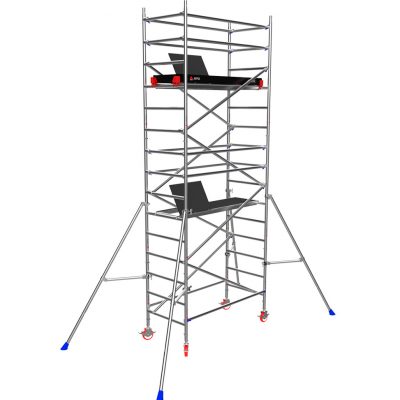
  1. Aluminium Scaffold Towers: Tall, self-supporting towers ideal for tasks requiring vertical reach. These towers often feature guardrails, adjustable height platforms, and strong stabilisers.

  2. Aluminium Folding Scaffolds: Compact and collapsible designs that save storage space and simplify transportation between job sites.

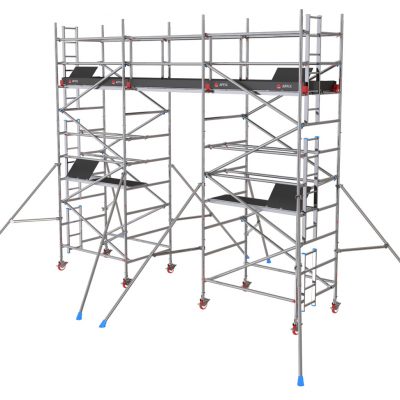
  3. Double Width Aluminium Scaffolding: Wider platforms provide more workspace and allow multiple workers to operate simultaneously, enhancing efficiency.

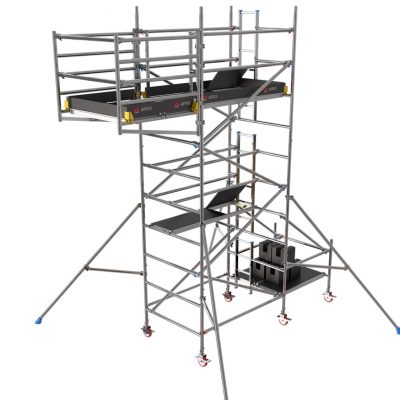
  4. Modular Aluminium Scaffolding: Systems that can be customised with extensions, additional platforms, or adjustable braces depending on the task.

Each type of mobile aluminium scaffold is engineered for specific operational requirements, offering versatility across construction, repair, and maintenance tasks.

Applications in Germany

Mobile aluminium scaffolding is widely used in Germany across sectors requiring safe and reliable elevated workspaces. Common applications include:

  • Construction and Renovation: Facilitates work on building facades, window installations, and roofing.

  • Industrial Maintenance: Used in factories, warehouses, and manufacturing facilities for equipment servicing or inspections.

  • Painting and Decorating: Offers a stable platform for professional painters, decorators, and maintenance personnel.

  • Events and Installations: Temporary stages, lighting setups, and exhibition constructions benefit from the mobility and modularity of aluminium scaffolds.

The adaptability of these scaffolds makes them a practical solution in urban and industrial environments, where space constraints and frequent repositioning are common challenges.

Safety and Compliance

In Germany, mobile aluminium scaffolding must comply with stringent safety standards, including DIN EN 1004, which governs mobile access and working towers. Key safety features include:

  • Guardrails and toe boards to prevent falls.

  • Lockable castors to prevent unintended movement.

  • Anti-slip platforms to reduce the risk of slips.

  • Stabilisers and outriggers for enhanced structural support.

These standards ensure that mobile aluminium scaffolding can be used safely in diverse professional environments, meeting both legal and operational requirements.

Advantages of Mobile Design

Mobility is a defining feature of aluminium scaffolding. Unlike fixed scaffolds, these units can be repositioned with minimal effort, reducing setup time and labour costs. They also allow for quick adjustments in height and configuration to accommodate various tasks. The modular nature of mobile aluminium scaffolding means sections can be added or removed as required, offering flexibility that stationary scaffolding cannot match.

  • Quick assembly: Tools are often minimal or unnecessary for assembly.

  • Portability: Lightweight aluminium allows a small team to manoeuvre scaffolds efficiently.

  • Space efficiency: Foldable and modular designs reduce storage requirements.

Why is Mobile Aluminium Scaffolding Popular?

Mobile aluminium scaffolding has gained significant popularity across Germany due to its combination of safety, efficiency, and versatility. Professionals from construction, maintenance, and industrial sectors rely on these scaffolds to complete projects effectively while ensuring worker protection. The design, materials, and mobility of aluminium scaffolding offer advantages that make it a preferred choice over traditional scaffolding types.

Lightweight and Easy to Handle

One of the primary reasons for the popularity of mobile aluminium scaffolding is its lightweight construction. Aluminium’s high strength-to-weight ratio allows scaffolds to be moved and adjusted with minimal effort. Unlike steel scaffolds, aluminium units can be repositioned by a small team, saving time and reducing labour costs. Mobility enables workers to respond quickly to changing job site requirements, making workflows smoother and more efficient.

  • Effortless movement: Wheels and castors allow easy relocation of scaffolds.

  • Simplified assembly: Minimal tools are required, reducing setup time.

  • Transportation ease: Lightweight sections are convenient to transport between sites.

Safety and Compliance

Safety is a critical factor influencing the adoption of mobile aluminium scaffolding in Germany. Compliance with DIN EN 1004 and other relevant safety standards ensures that scaffolding structures meet strict guidelines for stability, load capacity, and fall protection. Key safety elements include guardrails, anti-slip platforms, stabilisers, and secure locking mechanisms on wheels.

The emphasis on safety reduces workplace accidents and protects both workers and project timelines. Businesses can meet regulatory requirements confidently, making aluminium scaffolds a reliable choice for professional applications.

Versatility in Applications

Mobile aluminium scaffolding is suitable for a wide variety of tasks, contributing to its widespread use. Its modular design allows for customisation based on the specific requirements of a project. Whether for high-reaching scaffold towers, compact folding units, or double-width platforms, aluminium scaffolding adapts to different scenarios seamlessly.

  • Construction projects: Vertical and horizontal mobility ensures access to diverse work areas.

  • Maintenance work: Ideal for servicing equipment or facilities without permanent installation.

  • Industrial operations: Supports elevated inspections, painting, and installation tasks efficiently.

  • Event setups: Flexible platforms are used for temporary stages or lighting installations.

This adaptability makes mobile aluminium scaffolding a practical investment across multiple industries.

Cost Efficiency

Cost-effectiveness plays a significant role in its popularity. Despite offering high durability and safety, aluminium scaffolds are more economical than traditional steel scaffolds in the long term due to lower maintenance, longer lifespan, and ease of handling. Businesses benefit from reduced labour costs, quicker assembly, and decreased storage requirements.

  • Reduced labour expenses: Fewer personnel are needed to assemble and move scaffolds.

  • Low maintenance: Aluminium’s corrosion resistance minimises upkeep.

  • Longevity: Durable construction ensures many years of reliable use.

Space-Saving Design

In Germany, where work sites often face space constraints, mobile aluminium scaffolding offers an efficient solution. Folding and modular designs allow scaffolds to occupy minimal storage space when not in use. The ability to collapse, extend, or adjust configurations ensures maximum utility even in confined areas.

  • Foldable platforms: Save storage and transport space.

  • Modular components: Sections can be detached or combined as needed.

  • Compact transport: Smaller footprint simplifies logistics and storage.

Comparison with Other Scaffolding Types

Compared to traditional fixed scaffolding, mobile aluminium scaffolds are lighter, easier to move, and require less setup. Steel scaffolding, while strong, is heavier and less practical for frequent repositioning. Wooden scaffolding may be inexpensive, but it lacks durability and compliance with modern safety standards. Aluminium scaffolding balances safety, strength, and mobility, making it superior for professional use.

  • Steel scaffolds: Strong but heavy and labour-intensive.

  • Wooden scaffolds: Lightweight but prone to wear, limited compliance.

  • Aluminium scaffolds: Safe, lightweight, mobile, and long-lasting.

Environmental Considerations

Aluminium scaffolding is also favoured for its sustainability. Aluminium is recyclable and corrosion-resistant, reducing the environmental impact associated with frequent replacements. Its long service life and low maintenance needs further contribute to a more sustainable approach to workplace infrastructure.

Enhanced Productivity

The mobility and versatility of aluminium scaffolding directly enhance productivity. Workers can access elevated areas quickly, platforms can be adjusted to optimal heights, and multiple tasks can be performed simultaneously on double-width units. Reduced setup time, fewer interruptions, and easy relocation allow projects to progress efficiently.

Benefits of Mobile Aluminium Scaffolding

Mobile aluminium scaffolding has become a cornerstone in Germany for professionals seeking practical, safe, and efficient elevated work solutions. Its advantages extend across construction, industrial maintenance, painting, and renovation projects. Below is a detailed look at the benefits of choosing mobile aluminium scaffolding.

1. Lightweight and Easy to Transport

Aluminium scaffolding is significantly lighter than traditional steel scaffolds, which allows for effortless transportation and repositioning. This is particularly useful on large job sites or areas with limited access. Lightweight construction reduces the need for heavy machinery and allows a small team to manage setup and relocation efficiently.

  • Workers can move units across job sites with minimal effort.

  • Reduced physical strain improves safety and productivity.

  • Transportation between locations becomes faster and more cost-effective.

2. Simple Assembly and Disassembly

The modular design of aluminium scaffolding makes assembly straightforward and tool-free in many cases. Quick installation saves time and reduces labour costs while ensuring a secure and stable structure. Disassembly is equally easy, allowing for rapid relocation or storage.

  • Modular sections can be added or removed as needed.

  • Standardised connectors ensure consistent stability across configurations.

  • An efficient setup reduces downtime between projects.

3. High Durability and Longevity

Aluminium is naturally resistant to corrosion and rust, providing scaffolds with an extended lifespan even in challenging environments. This durability reduces the need for frequent replacements and lowers long-term maintenance costs.

  • Long-lasting materials withstand regular use in industrial or construction settings.

  • Non-corrosive surfaces maintain structural integrity over time.

  • Minimal maintenance requirements save money and effort.

4. Enhanced Safety

Mobile aluminium scaffolding is designed with safety as a top priority. Compliance with DIN EN 1004 and other safety standards ensures protection for workers at all heights. Features like guardrails, anti-slip platforms, and stabilisers reduce the risk of accidents.

  • Lockable wheels prevent unintended movement.

  • Guardrails and toe boards protect against falls.

  • Sturdy platforms provide stable and secure working areas.

5. Flexibility and Versatility

One of the standout benefits is the adaptability of mobile aluminium scaffolding. Its modular design allows it to be used for multiple tasks, from high-reach towers to compact folding units. The ability to customise configuration and height makes it suitable for a wide range of applications.

  • Adjustable platforms accommodate different work heights.

  • Multiple configurations allow simultaneous work for teams.

  • Compatible with various accessories for specialised tasks.

6. Cost-Effectiveness

Although the initial investment may be higher than basic scaffolding, mobile aluminium scaffolds offer long-term cost savings. Lightweight design, durability, and low maintenance reduce ongoing expenses, while faster assembly and mobility save on labour costs.

  • Reduced setup and relocation time lowers project expenses.

  • Minimal maintenance ensures longevity without repeated replacements.

  • Efficiency gains improve overall project cost management.

7. Space-Saving Design

Foldable and modular aluminium scaffolds require less storage space compared to traditional scaffolds. In urban areas or sites with limited room, this feature proves invaluable. Compact storage also simplifies transportation and logistics.

  • Folding units occupy minimal warehouse or storage space.

  • Modular components allow stacking or a compact arrangement.

  • Efficient storage reduces clutter and enhances workplace organisation.

8. Supports Multiple Workers

Certain designs, such as double-width aluminium scaffolding, provide broader platforms for multiple workers to operate simultaneously. This increases productivity and makes team-based tasks more efficient.

  • Wider platforms allow safe collaboration.

  • Adequate weight capacity accommodates multiple personnel and tools.

  • Streamlined workflow reduces delays caused by single-user platforms.

9. Minimal Environmental Impact

Aluminium is recyclable and requires less maintenance, contributing to a lower environmental footprint. The longevity of mobile aluminium scaffolding also reduces waste from frequent replacements.

  • Recyclable materials support sustainability initiatives.

  • Durable construction minimises resource consumption over time.

  • Reduced maintenance decreases environmental impact from coatings or repairs.

10. Adaptable to Various Job Sites

The mobility and modularity of aluminium scaffolding allow it to be used in confined spaces, uneven terrain, or areas with frequent reconfiguration. Professionals can adjust platforms and heights quickly, adapting to changing project requirements.

  • Adjustable heights suit diverse tasks and surfaces.

  • Wheels and stabilisers ensure safe operation on different terrains.

  • Modular design allows customisation to site-specific requirements.

11. Ideal for Both Indoor and Outdoor Use

Mobile aluminium scaffolding is versatile enough for indoor and outdoor applications. Its corrosion-resistant properties and stable construction make it suitable for use in workshops, factories, and construction sites exposed to weather conditions.

  • Indoor use provides safe, elevated access for maintenance or installation.

  • Outdoor use withstands environmental factors without compromising safety.

  • A multi-purpose application reduces the need for separate scaffolding systems.

12. Increased Efficiency

The combination of lightweight materials, mobility, and ease of assembly results in improved workflow efficiency. Workers spend less time setting up scaffolds and more time completing tasks safely.

  • Rapid relocation between work zones saves project time.

  • Adjustable platforms enable efficient task management.

  • Team productivity is enhanced through simultaneous operations on larger platforms.

Features of Mobile Aluminium Scaffolding

Mobile aluminium scaffolding has become a preferred solution in Germany due to its combination of safety, durability, and adaptability. The features of these scaffolds are specifically designed to enhance productivity, ensure worker safety, and accommodate a wide range of professional applications. Below is a detailed overview of the most important features and their practical benefits.

1. Adjustable Height

Adjustable height is a key feature that allows scaffolds to be used for various tasks and reach different elevations without the need for multiple units. Platforms can be raised or lowered efficiently to match the requirements of a specific job.

  • Customizable work heights: Workers can adjust platforms for comfort and accessibility.

  • Reduces the need for ladders or additional scaffolds: Provides a safe and stable working area.

  • Enhances productivity: Workers can perform tasks at optimal height without interruption.

2. Mobility with Wheels

Mobile aluminium scaffolding is equipped with high-quality wheels or castors that enable smooth movement across job sites. Locking mechanisms secure the scaffold in place during use.

  • Easy relocation: Wheels allow units to be moved with minimal effort.

  • Safety locks: Prevent unintended movement while elevated.

  • Versatility: Works effectively on smooth and level surfaces.

3. Modular Design

The modular design of aluminium scaffolding allows components to be assembled, disassembled, or extended as needed. This flexibility is crucial for adapting scaffolds to different project requirements.

  • Expandable sections: Additional frames or platforms can be added.

  • Custom configurations: Modular elements support different heights, widths, and workspaces.

  • Simplifies storage: Individual components can be stored compactly when not in use.

4. Safety Rails and Toe Boards

Safety is a primary concern, and mobile aluminium scaffolding incorporates guardrails and toe boards to prevent falls and protect workers. These features meet or exceed German safety standards such as DIN EN 1004.

  • Guardrails: Prevent accidental falls from elevated platforms.

  • Toe boards: Stop tools or materials from slipping off edges.

  • Enhanced worker confidence: Safety features allow focus on tasks without risk.

5. Foldable Platforms

Foldable platforms make storage and transport more convenient while maintaining structural integrity when in use. The ability to collapse sections simplifies logistics and reduces space requirements.

  • Compact storage: Platforms fold down to occupy less space.

  • Ease of transportation: Foldable units are easier to load and move between locations.

  • Quick deployment: Folding mechanisms allow rapid setup at job sites.

6. Anti-Slip Surfaces

Aluminium scaffold platforms are often equipped with anti-slip surfaces to provide traction for workers, reducing the risk of slips and falls. This is particularly important in industrial or outdoor environments where surfaces may be wet or dusty.

  • Improves worker safety: Reduces accidents caused by slips.

  • Suitable for various conditions: Maintains grip on both indoor and outdoor surfaces.

  • Compliance with regulations: Supports adherence to workplace safety standards.

7. Locking Mechanisms

Locking mechanisms on wheels and joints ensure scaffolds remain stable and secure during use. These features prevent unintentional movement or collapse, especially on uneven or sloped surfaces.

  • Secures the scaffold in position: Prevents accidents caused by movement.

  • Stability under load: Supports safe work at elevated heights.

  • Easy operation: Simple locks allow rapid engagement and release.

8. Lightweight Aluminium Construction

The lightweight nature of aluminium reduces manual handling efforts while maintaining strength and durability. Workers can move, adjust, or assemble scaffolds without heavy machinery.

  • Minimises physical strain: Facilitates easier assembly and repositioning.

  • Supports efficient teamwork: Smaller crews can manage scaffold setup.

  • Durable yet portable: Combines strength with convenience.

9. Multi-Level Platforms

Some mobile aluminium scaffolds offer multi-level platforms, providing several working heights within the same structure. This feature is useful for teams performing different tasks simultaneously or for adjusting positions quickly.

  • Versatile workspace: Accommodates various operations on the same scaffold.

  • Time-efficient: Reduces the need to disassemble and rebuild platforms for height changes.

  • Supports multiple users safely: Provides stable access for teams.

10. Compatibility with Accessories

Modern mobile aluminium scaffolds are designed to be compatible with accessories like tool trays, ladders, and stabilisers. These additions enhance usability and efficiency.

  • Tool trays: Keep tools accessible and organised at height.

  • Additional braces: Increase stability for heavier loads or wider platforms.

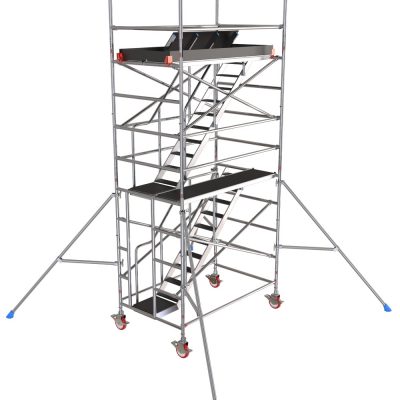
  • Ladders or stairs: Facilitate safe access to elevated platforms.

11. Corrosion-Resistant Finish

Aluminium scaffolds are naturally resistant to corrosion, and many come with protective finishes to increase durability. This ensures long-term performance even in outdoor or industrial environments.

  • Extends scaffold life: Reduces replacement costs over time.

  • Low maintenance: Requires minimal upkeep compared to steel or wooden scaffolds.

  • Reliable performance: Maintains structural integrity in varying conditions.

12. Double Width and Broad Platforms

Some aluminium scaffolds feature double-width designs, offering more workspace and allowing multiple workers to operate simultaneously. This improves productivity and provides extra room for tools and equipment.

  • Increased working area: Supports team-based tasks efficiently.

  • Safer collaboration: Extra space reduces crowding on platforms.

  • Optimised workflow: Allows smooth operations without repositioning.

Tips to Follow While Looking for Mobile Aluminium Scaffolding

Selecting the right mobile aluminium scaffolding in Germany requires careful consideration of factors that ensure safety, durability, and suitability for your specific applications. Making the correct choice improves productivity, reduces risks, and ensures compliance with industry standards. Below are practical tips to follow when evaluating and purchasing mobile aluminium scaffolding.

1. Check Load Capacity

Understanding the weight capacity of the scaffold is essential to ensure it can safely support workers, tools, and materials. Mobile aluminium scaffolds come in varying capacities, and selecting the appropriate one reduces the risk of accidents.

  • Assess job requirements: Choose scaffolds capable of handling the maximum anticipated loads.

  • Consider multi-user scenarios: Double-width platforms may require higher weight capacities.

  • Factor in additional equipment: Ensure platforms can support tools and materials safely.

2. Verify Safety Certifications

Safety compliance is crucial in Germany. Look for scaffolds that meet DIN EN 1004 standards or other relevant certifications. Certified scaffolding ensures adherence to legal regulations and reduces workplace hazards.

  • Check for official marks: Certifications from recognised authorities confirm compliance.

  • Understand local regulations: Ensure the scaffold meets both national and site-specific safety requirements.

  • Prioritise safety over cost: Certified scaffolds provide reliable protection for workers.

3. Inspect Material Quality

The quality of aluminium and other components directly impacts scaffold durability and performance. High-grade aluminium alloys offer superior strength, corrosion resistance, and longevity.

  • Examine welds and joints: Strong construction enhances stability.

  • Check platform integrity: Anti-slip surfaces should be durable and resistant to wear.

  • Confirm corrosion resistance: Ideal scaffolds maintain performance in outdoor and industrial environments.

4. Evaluate Mobility Features

Mobility is a defining characteristic of these scaffolds. Ensure wheels or castors are sturdy, smooth-rolling, and lockable. This ensures safe movement and prevents accidental shifts during use.

  • Inspect wheel quality: Heavy-duty castors improve manoeuvrability.

  • Check locking mechanisms: Locks secure the scaffold during operation.

  • Assess terrain compatibility: Ensure wheels can operate efficiently on indoor and outdoor surfaces.

5. Consider Adjustability

Adjustable scaffolds provide flexibility for multiple applications. Look for units with height-adjustable platforms and modular sections for customisation.

  • Assess platform height range: Suitable for both low and high-access tasks.

  • Check for modular compatibility: Allows extensions or modifications based on project needs.

  • Ease of adjustment: Platforms should adjust without excessive effort or tools.

6. Review Storage and Transport Requirements

Foldable and compact scaffolding designs are ideal for sites with limited storage or frequent relocation. Ensure that the scaffold can be transported easily and stored efficiently.

  • Foldable platforms: Simplify transportation and storage.

  • Stackable modular components: Save warehouse space.

  • Lightweight design: Enables easy handling by small teams.

7. Inspect Safety Features

Additional safety features contribute to worker protection. Look for guardrails, toe boards, anti-slip surfaces, and stabilisers. These elements are essential for secure operation at height.

  • Guardrails: Prevent falls from elevated platforms.

  • Toe boards: Keep tools and materials from sliding off platforms.

  • Stabilisers or outriggers: Enhance overall scaffold stability.

8. Consider the Supplier’s Reliability

Choosing a reputable supplier ensures the scaffolding meets quality standards and comes with proper support. Reliable suppliers provide clear product information, certifications, and after-sales assistance.

  • Check company credibility: Established suppliers typically offer quality-assured products.

  • Look for warranties: Ensure coverage for defects or issues.

  • Support services: Access to guidance on assembly, maintenance, and compliance.

9. Assess Cost Versus Value

While cost is an important factor, it should not compromise safety or quality. Evaluate the scaffold’s features, durability, and certification against the price to ensure a good long-term investment.

  • Avoid low-cost shortcuts: Inferior materials can compromise safety.

  • Consider lifespan and maintenance: High-quality scaffolds offer long-term savings.

  • Compare multiple options: Assess features, certifications, and support before purchase.

10. Plan for Maintenance

Proper maintenance extends the lifespan of scaffolding. Ensure the scaffold is easy to clean, inspect, and service. Regular checks prevent structural failures and maintain safety compliance.

  • Inspect joints and welds regularly: Identify wear or damage early.

  • Keep platforms and wheels clean: Prevents deterioration and improves safety.

  • Follow manufacturer instructions: Ensure longevity and consistent performance.

11. Evaluate Versatility

A versatile scaffold adapts to various project requirements. Look for units suitable for indoor and outdoor tasks, multi-level platforms, and compatibility with accessories such as tool trays or ladders.

  • Adaptable configurations: Modular sections enable custom setups.

  • Support for different applications: From construction to maintenance, scaffolds should meet diverse needs.

  • Accessory compatibility: Enhances usability and efficiency.

12. Consider Legal Compliance

Ensure the scaffolding complies with German legal requirements for workplace safety. This includes load limits, safety features, and proper documentation for inspections.

  • Check local regulations: Align scaffold usage with legal standards.

  • Verify documentation: Supplier should provide manuals and certificates.

  • Training requirements: Ensure workers are trained to use scaffolds safely.

Why Choose Affix Scaffolding?

Selecting the right supplier for mobile aluminium scaffolding is crucial for professionals seeking reliable, high-quality, and safe scaffolding solutions in Germany. Affix Scaffolding has established a reputation for delivering premium aluminium scaffolds designed to meet the demanding needs of construction, industrial, and maintenance projects. Choosing Affix Scaffolding ensures access to products that combine safety, efficiency, and durability.

1. High-Quality Products

Affix Scaffolding focuses on delivering scaffolding systems made from top-grade aluminium alloys. Each scaffold is manufactured with precision to ensure maximum strength, corrosion resistance, and longevity.

  • Durable construction: Aluminium frames and platforms withstand regular use and harsh conditions.

  • Non-corrosive materials: Reduce maintenance and extend scaffold lifespan.

  • Certified compliance: Products meet DIN EN 1004 and other relevant safety standards.

By investing in high-quality scaffolding, professionals can rely on safe and stable platforms for elevated work, ensuring that productivity and safety are never compromised.

2. Comprehensive Product Range

Affix Scaffolding offers a wide selection of mobile aluminium scaffolds, including aluminium scaffold towers, folding scaffolds, double-width platforms, and modular systems. This diverse range caters to multiple applications and varying project requirements.

  • Aluminium Scaffold Towers Germany: Ideal for high-reach tasks with guardrails and adjustable platforms.

  • Folding Scaffolds: Space-saving and portable for frequent relocation.

  • Double-Width Scaffolds: Broader platforms for team-based tasks.

  • Modular Scaffolding: Customizable to match specific height and width requirements.

The variety of options allows businesses and professionals to choose scaffolds suited to their unique operational needs.

3. Safety-Centric Design

Safety is at the forefront of Affix Scaffolding’s products. Each scaffold includes features designed to protect workers and ensure compliance with stringent German safety regulations.

  • Guardrails and toe boards: Prevent falls and secure tools or materials.

  • Lockable wheels and stabilisers: Ensure stability and prevent unintended movement.

  • Anti-slip platforms: Provide traction for safe use in indoor and outdoor conditions.

By prioritising safety, Affix Scaffolding minimises risk and allows workers to focus on tasks confidently.

4. Ease of Assembly and Mobility

Affix Scaffolding products are designed for quick and simple assembly. Modular components fit together seamlessly, and lightweight aluminium construction allows small teams to move scaffolds efficiently across job sites.

  • Rapid assembly: Reduces setup time and labour costs.

  • Lightweight materials: Enable effortless relocation and repositioning.

  • Foldable and modular units: Simplify transport and storage requirements.

The combination of mobility and ease of use ensures that projects remain on schedule while maintaining safety and efficiency.

5. Reliable Customer Support

Affix Scaffolding emphasises strong customer service, offering guidance on scaffold selection, assembly, and maintenance. This support ensures that clients make informed choices and use scaffolds correctly for optimal performance.

  • Expert advice: Helps identify the right scaffolding solution for specific needs.

  • After-sales support: Assistance with maintenance, parts, and compliance queries.

  • Responsive service: Quick resolution of technical or operational questions.

Reliable customer support enhances the overall user experience and maximises the value of each scaffold.

6. Compliance with Standards

Affix Scaffolding ensures all products comply with German and European standards for mobile scaffolding. This includes structural integrity, load capacity, and safety features. Compliance guarantees legal adherence and enhances workplace safety.

  • DIN EN 1004 compliance: Ensures scaffolds meet rigorous safety requirements.

  • Regular quality checks: Verify scaffold performance and reliability.

  • Documentation and certificates: Assure compliance for regulatory inspections.

Professional users can confidently integrate Affix scaffolds into their operations without concerns about legal or safety issues.

7. Versatility Across Applications

The wide range of scaffolds and features makes Affix Scaffolding suitable for various projects, including construction, industrial maintenance, painting, and temporary installations. Adjustable heights, modular sections, and foldable designs ensure scaffolds adapt to multiple environments and tasks.

  • Indoor and outdoor usability: Safe and effective across different terrains and weather conditions.

  • Team-friendly platforms: Double-width and multi-level designs allow simultaneous work.

  • Accessory compatibility: Supports tool trays, ladders, and stabilisers for added functionality.

The adaptability of these scaffolds ensures they remain practical and effective for a broad spectrum of professional tasks.

8. Long-Term Investment

Purchasing scaffolding from Affix Scaffolding represents a long-term investment in safety, reliability, and productivity. Durable materials, low maintenance requirements, and modular functionality ensure scaffolds remain valuable assets for years.

  • Cost-effective solutions: High-quality aluminium reduces replacement and maintenance expenses.

  • Durable materials: Resist wear, corrosion, and frequent relocation.

  • Versatile usage: Supports multiple projects, maximising return on investment.

9. Commitment to Innovation

Affix Scaffolding continuously updates its product line to incorporate innovative designs and improvements in safety and usability. This commitment ensures professionals in Germany have access to scaffolding that meets evolving industry standards and project demands.

  • Enhanced mobility: Improved wheels and locking mechanisms for easier handling.

  • Advanced safety features: Incorporation of anti-slip surfaces and stronger guardrails.

  • Modular adaptability: Supports diverse configurations for efficient project execution.

10. Professional Reputation

Affix Scaffolding is known for providing reliable scaffolding solutions that consistently meet professional expectations. Their products’ durability, compliance, and performance make them a trusted choice for construction companies, industrial facilities, and maintenance teams.

  • Trusted by professionals: Long-standing presence in the German scaffolding market.

  • Proven quality: Products consistently deliver safety and performance.

  • Reliable partnerships: Supports clients through consultation and ongoing service.

Choosing Affix Scaffolding ensures access to high-quality mobile aluminium scaffolds, backed by professional support, safety compliance, and versatility. Their commitment to product excellence and customer satisfaction makes them a leading choice for businesses and tradespeople seeking dependable scaffolding solutions in Germany.

FAQs

1. What types of mobile aluminium scaffolding are available in Germany?

Mobile aluminium scaffolding includes scaffold towers, folding scaffolds, double-width scaffolds, and modular systems. Each type is designed for specific tasks, offering adjustable heights, mobility, and compliance with safety standards, ensuring safe and efficient access for construction, maintenance, and industrial applications.

2. How do I ensure the scaffold is safe to use?

Check for certifications like DIN EN 1004, inspect guardrails, toe boards, anti-slip surfaces, and locking mechanisms. Verify load capacity, wheel functionality, and structural integrity before use. Regular maintenance, proper assembly, and adherence to safety guidelines help ensure scaffolds remain safe for professional applications.

3. Can mobile aluminium scaffolds be used outdoors?

Yes, aluminium scaffolds are corrosion-resistant and suitable for outdoor use. They provide stable elevated platforms for construction, maintenance, painting, and industrial tasks. Ensure wheels are locked, platforms are stable, and the scaffold is set on level ground to maintain safety in outdoor environments.

4. How easy is it to move mobile scaffolding?

Mobility is a key feature. Lockable wheels allow smooth movement across job sites. Lightweight aluminium construction ensures small teams can reposition scaffolds efficiently. Always engage wheel locks once in position to maintain stability and prevent accidental movement during elevated work.

5. What load capacity should I consider?

Choose scaffolding based on maximum anticipated loads, including personnel, tools, and materials. Double-width or multi-level platforms may require higher capacities. Ensuring the scaffold supports all operational weight safely prevents accidents and meets regulatory safety standards in Germany.

6. Are folding aluminium scaffolds suitable for confined spaces?

Yes, folding scaffolds are ideal for tight spaces or storage-constrained sites. They can be collapsed for transport or storage and quickly assembled on-site. Modular sections allow flexible adjustments to fit various project dimensions while maintaining safe and stable elevated work platforms.

7. How do I maintain mobile aluminium scaffolding?

Regularly inspect joints, welds, and platforms for wear or damage. Clean wheels and platforms to remove dust, debris, or moisture. Follow manufacturer instructions for maintenance and lubrication to ensure long-term safety, reliability, and compliance with German scaffolding regulations.

8. Can multiple workers use the same scaffold simultaneously?

Yes, double-width scaffolds or wider platforms allow multiple personnel to work safely together. Ensure the scaffold’s load capacity is not exceeded, guardrails and toe boards are in place, and platforms are stable to provide secure access for all users simultaneously.

9. What certifications should mobile aluminium scaffolding have in Germany?

Look for scaffolds compliant with DIN EN 1004 or other recognised European safety standards. These certifications verify structural integrity, load capacity, and safety features like guardrails and anti-slip surfaces. Certified scaffolds meet legal requirements and provide professional-grade reliability.

10. Are modular scaffolds compatible with accessories?

Yes, modular aluminium scaffolds can accommodate accessories such as ladders, stabilisers, tool trays, or additional platforms. Compatibility allows customisation for specific tasks, enhancing safety, efficiency, and versatility for construction, industrial, and maintenance applications.